 English▾
 Chinese
 French
 Portuguese
 Spanish
 Russian
Across Europe, the network edge is quietly becoming the network core. From EV-charging hubs and metro tunnels to water-treatment plants and logistics warehouses, engineers are being asked to power and manage more IP devices — IP cameras, wireless APs, sensors and access controllers— over longer distances, in harsher conditions and under tighter budgets. For most projects, the answer is a L2/L2+ managed industrial PoE switch: a hardened device that combines reliable power delivery, deterministic networking and remote diagnostics in a compact DIN-rail package.
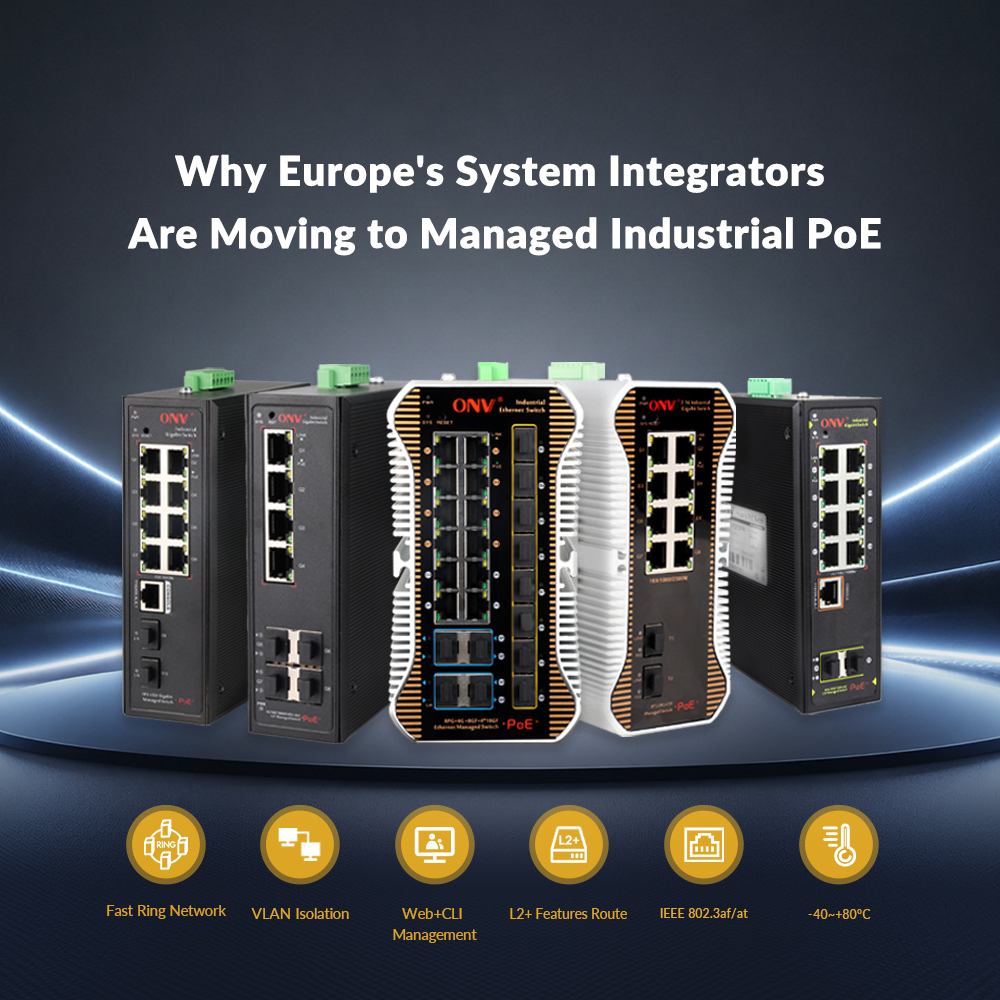
This guide is written for the three roles that most often specify these switches in European tenders: technical selection engineers at system integrators and project contractors, IT/OT-convergence leads running critical facilities, and procurement decision-makers who own total cost of ownership (TCO).
What Each Buyer Actually Needs
1. Technical selection engineers (system integrators & project contractors)
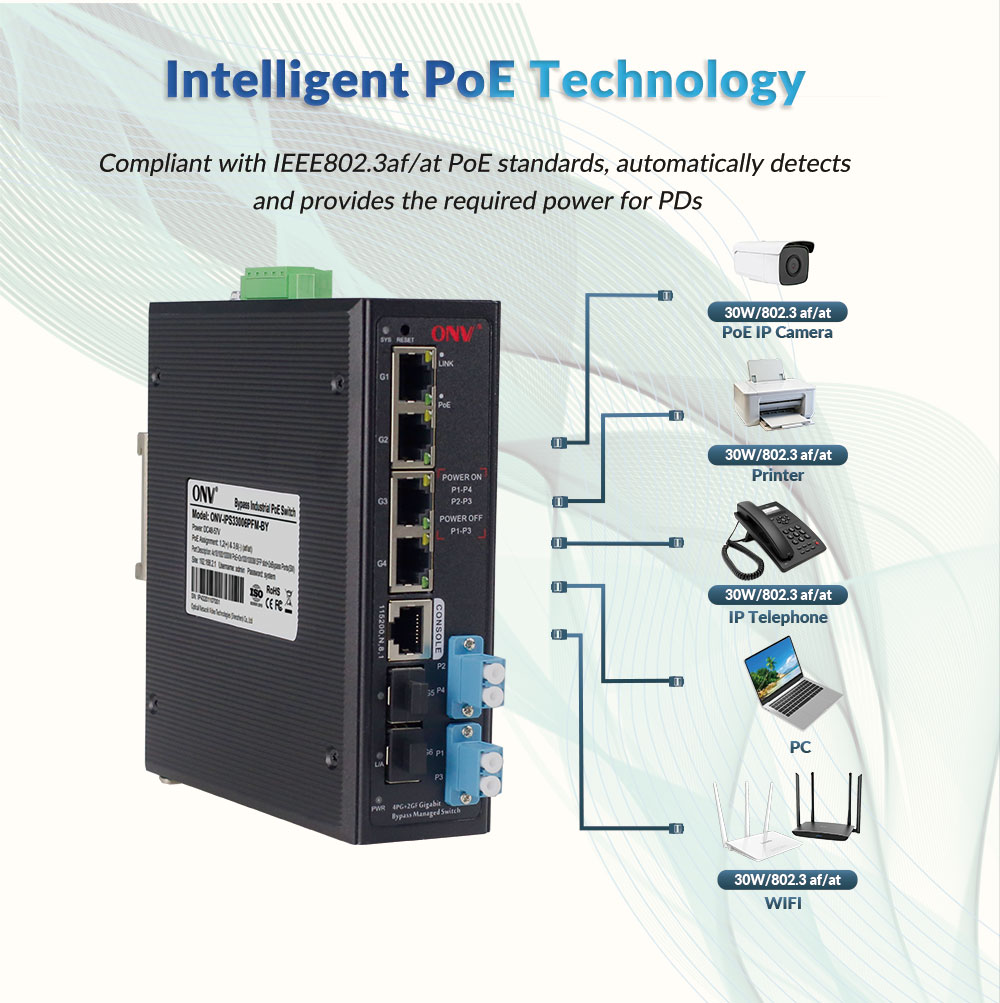
l Standards compliance: IEEE 802.3af/at with up to 30 W per port and automatic PD detection that will not damage non-PoE equipment.
l Deterministic redundancy: ERPS/G.8032 ring recovery in under 20 ms and RSTP in under 50 ms keep mission-critical links alive during a single failure.
l Flexible topology: Gigabit RJ45 access plus uplink SFP fibre, with bypass optical switching that keeps the fibre path connected even when the switch itself loses power.
2. IT/OT convergence leads (critical-facility O&M)
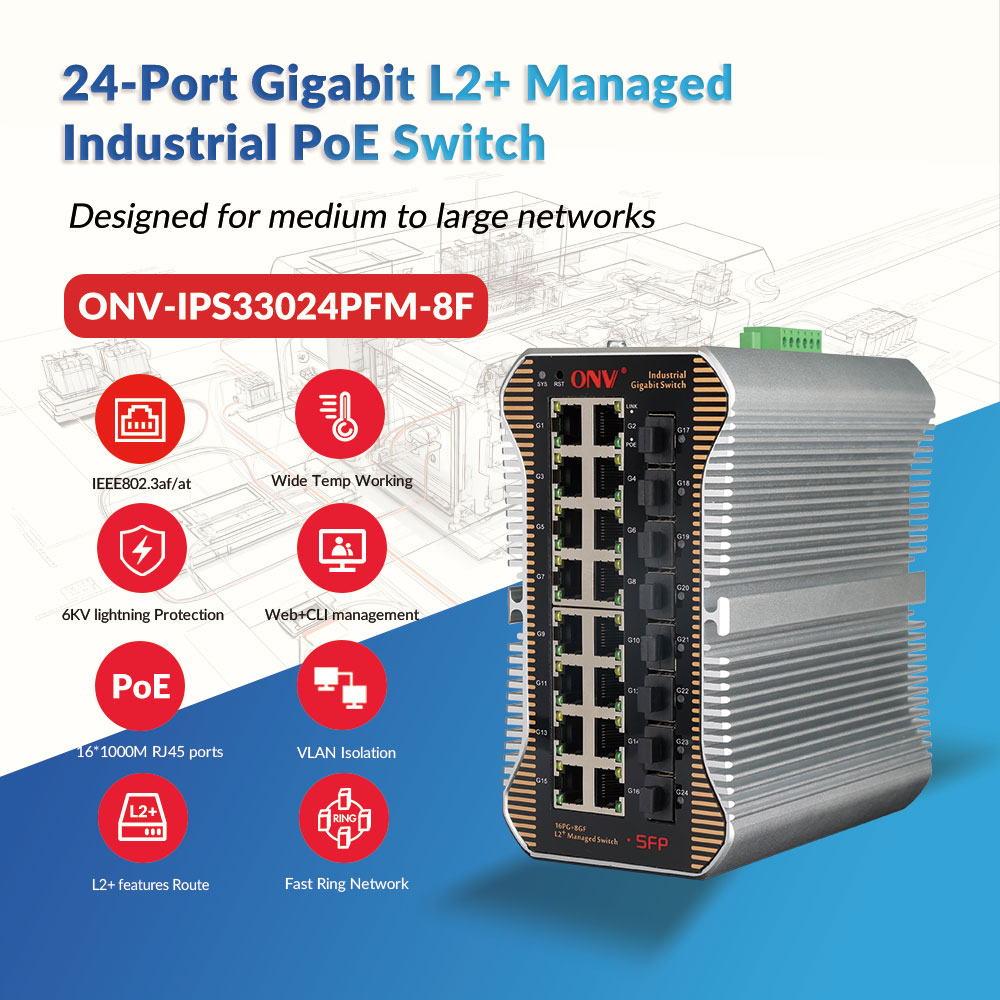
l Unattended reliability: a fanless, wide-temperature design that suits sealed street cabinets and plant rooms.
l Network segmentation: 4K 802.1Q VLANs, L2–L4 ACL packet filtering, IGMP snooping and DiffServ QoS (SP, WRR, SP+WRR).
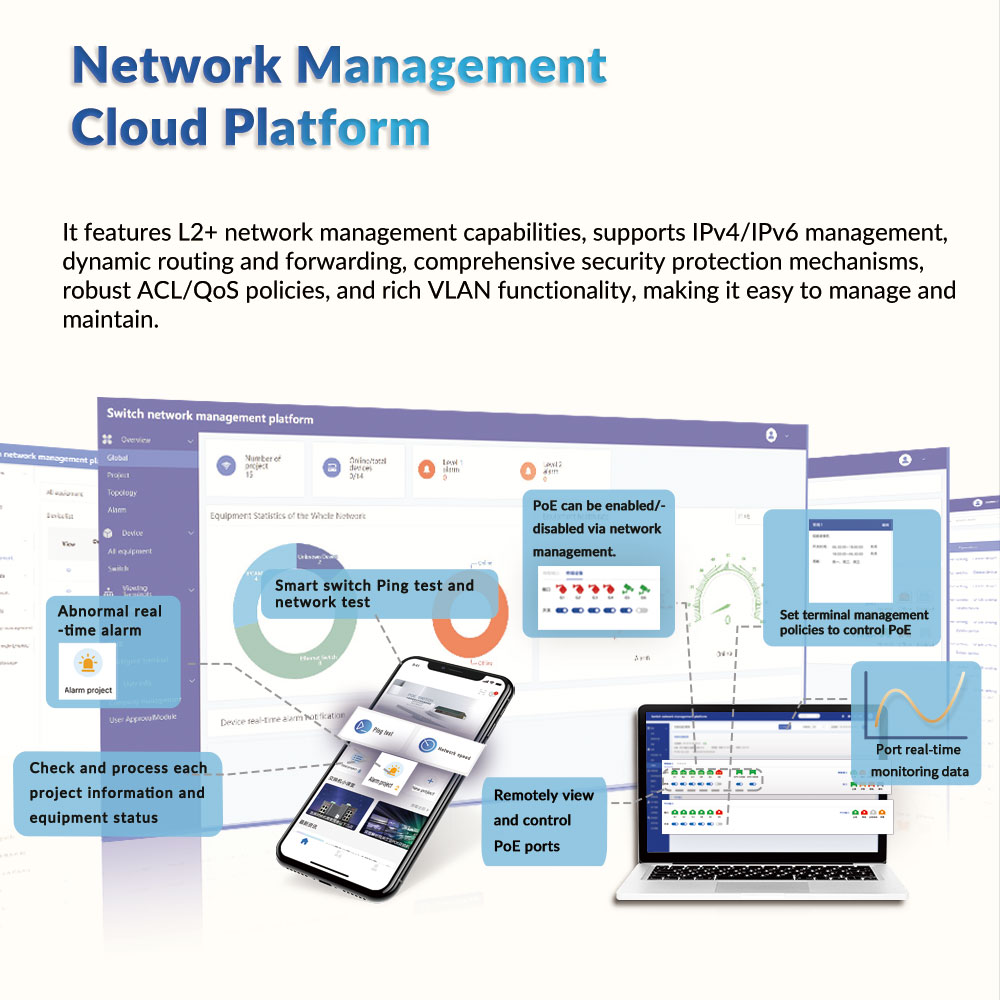
l Remote O&M: Web, CLI, Telnet and SNMP v1/v2c/v3 management, plus CPU/memory monitoring, cable status checks and Ping tests.
3. TCO-focused procurement decision-makers
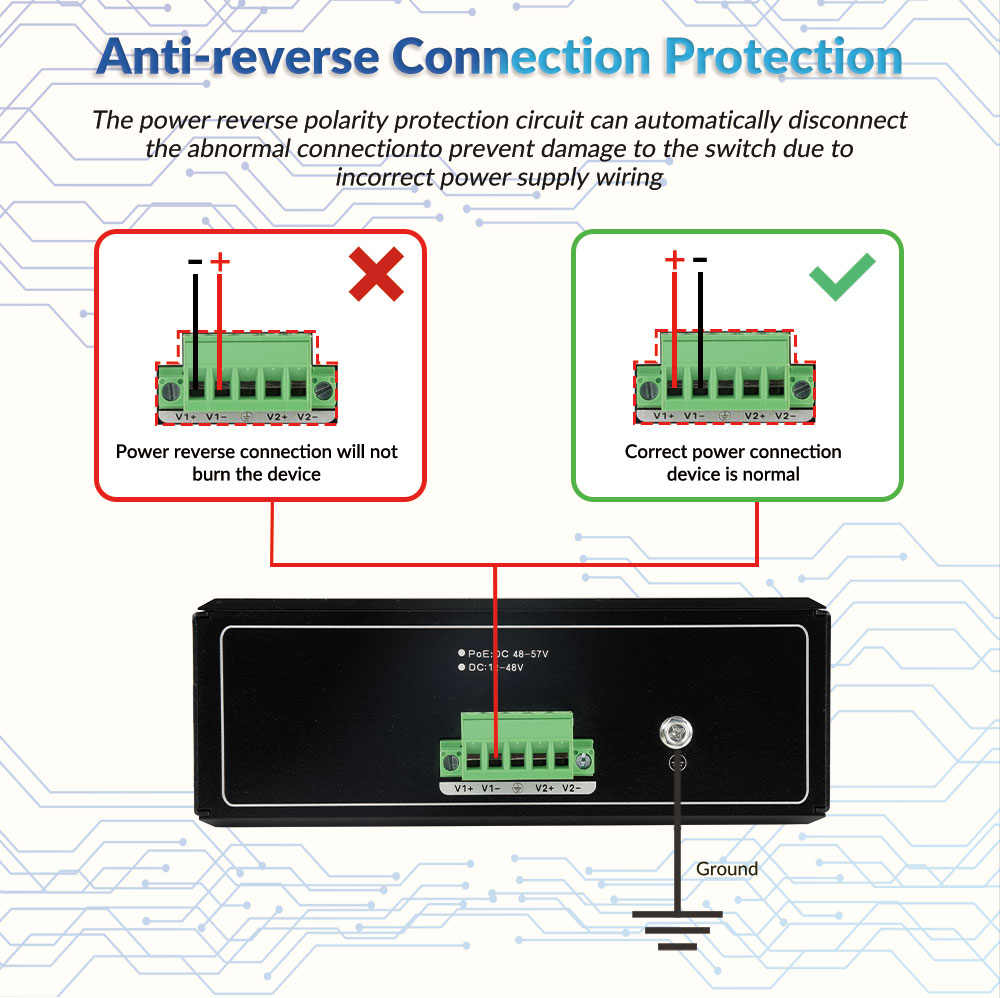
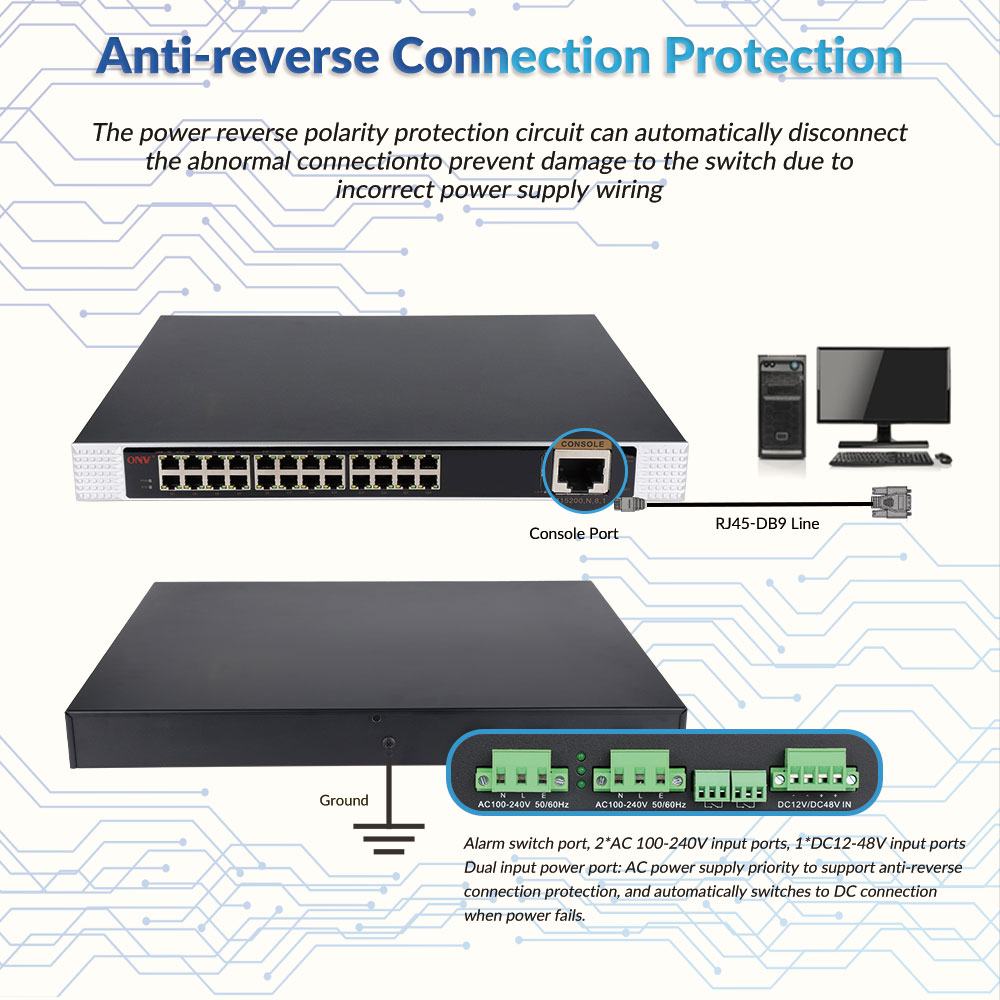
l Fewer single points of failure: dual redundant DC power input and redundant ring topologies reduce unplanned downtime.
l Lower energy and service bills: an aluminium, fanless housing with low standby consumption cuts both electricity and field-service visits.
l Low lifetime cost: a 5-year warranty with lifelong maintenance and full CE/FCC/RoHS compliance removes hidden service and re-certification costs.
L2 vs L2+ vs L3 Managed: Choosing the Right Layer
|
Capability |
Unmanaged |
L2 / L2+ / L3 managed (recommended) |
|
PoE power (802.3af/at, 30 W/port) |
Fixed, no control |
Per-port allocation, priority, on/off and status |
|
Redundancy |
None |
RSTP <50 ms, ERPS ring <20 ms, LACP aggregation |
|
Traffic control |
None |
VLAN, QoS, IGMP snooping, port mirroring |
|
Security |
None |
802.1X, ACL L2–L4, port isolation, DHCP snooping |
|
Routing |
None |
IPv4/IPv6, static / default routing (L2+), IPv4/IPv6, dynamic routing forwarding (L3) |
|
Management |
Plug and play |
SNMP, Web, CLI, Telnet, NTP, LLDP |
Built for European Field Conditions
l Certifications that matter in the EU: CE, CE/LVD EN 62368-1, FCC Part 15 Class A and RoHS.
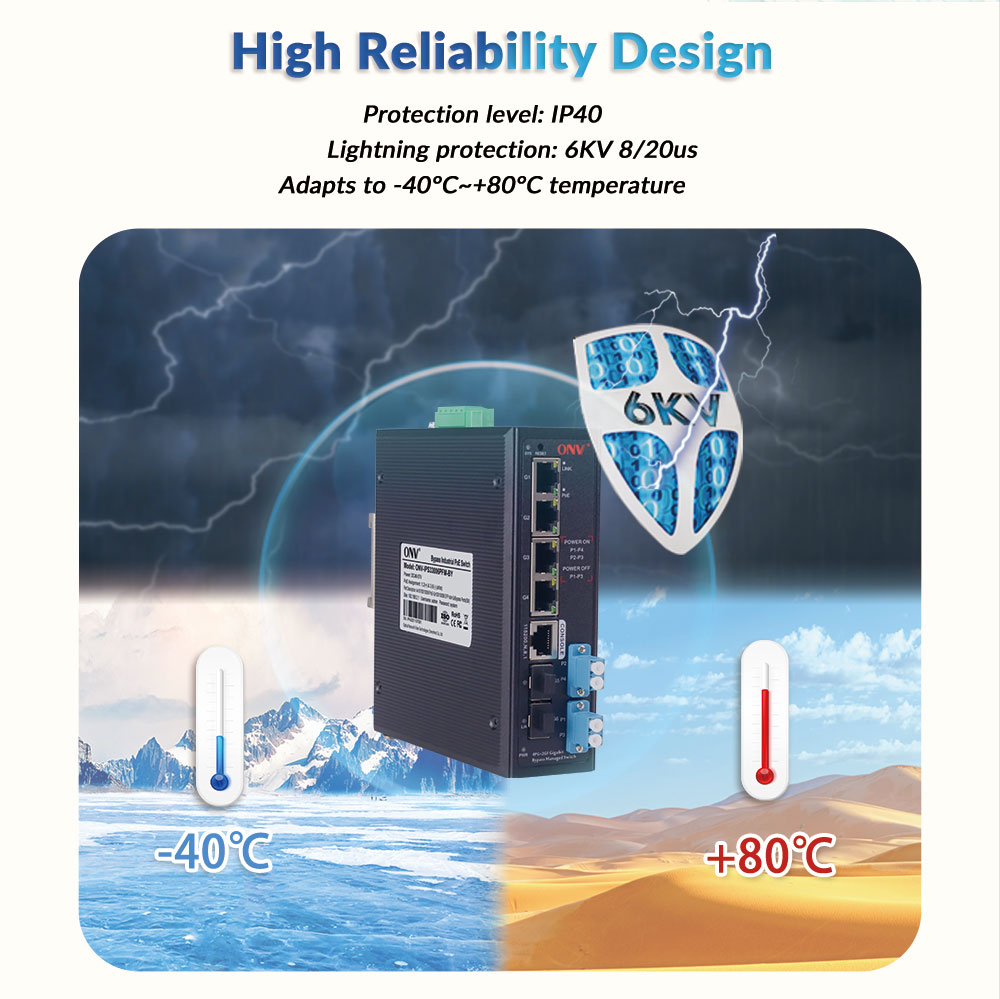
l Wide temperature range: −40 °C to +80 °C operation for outdoor cabinets and unheated plant rooms.
l Industrial EMC protection: 6 kV surge protection and IEC 61000-4-x immunity (ESD, EFT, radiated RF) for electrically noisy sites.
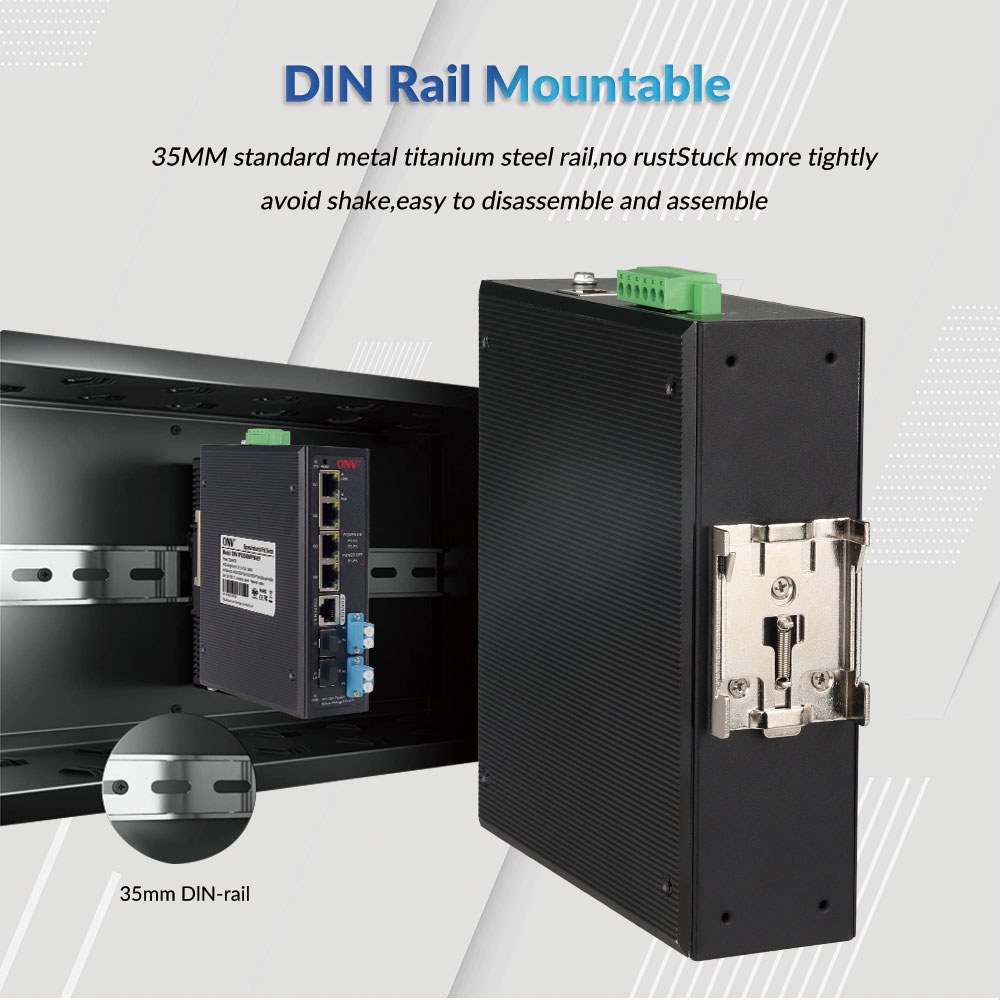
l Rugged mechanics: IP40 aluminium housing, 35 mm DIN-rail or desktop mounting, IEC 60068 vibration and shock compliance.
Typical European Applications
l Critical facilities: data rooms, hospitals and water plants that require segmented, monitored OT networks.
l Building automation & EV charging: PoE-powered APs, cameras and controllers across large campuses.
l Energy & utilities: substations and renewable sites needing wide-temperature operation and ring redundancy.
l Smart transport & rail: trackside and tunnel networks where bypass fibre protection prevents a power fault from breaking the backbone.
How to Specify Confidently
1. Verify compliance and warranty: CE, RoHS, 5-year warranty and lifelong maintenance.
2. Map the topology: choose ERPS/RSTP rings for reliability and SFP uplinks for distance.
3. Confirm the environment: temperature range, DIN-rail space, EMC and surge requirements.
4. Count PoE devices and their power class — then add 30–50 % headroom for the power budget.
Conclusion
For European system integrators, critical-facility operators and TCO-driven buyers, a managed industrial PoE switch is no longer a premium option — it is the baseline for networks that must stay up. By combining IEEE 802.3af/at PoE, sub-20 ms ring recovery, bypass optical protection, wide-temperature operation, and remote O&M in one hardened unit, L2/L2+ managed industrial PoE switches deliver the reliability the field demands at a total cost of ownership that the board can defend.
Explore our full range of industrial PoE switches — from compact 6-port bypass PoE switches to 10-port and higher-density L2+ managed units — and let our engineers help you specify the right switch for your next European project.